
Every dog owner planning to explore Malta’s UNESCO World Heritage sites faces the same dilemma: Mdina’s car-free cobblestones seem perfect for dogs, while Rabat’s bustling streets look problematic. After walking dozens of dogs through both cities across three summers, I can tell you the opposite is true. Rabat consistently delivers better experiences for both dogs and their humans, despite appearances.
The Four Critical Mistakes Dog Owners Make
Mistake 1: Assuming Car-Free Equals Dog-Friendly
Mdina’s pedestrian-only status creates an illusion of safety that dissolves the moment you enter Bastion Square with your dog. The medieval city becomes a funnel. Tourists cluster around the same photo spots, children run unpredictably between groups, and your dog has nowhere to retreat when overwhelmed.
I watched a German Shepherd have a complete meltdown near the Cathedral last August, pressed against the ancient walls while tour groups flowed around him. His owner had assumed the lack of cars meant less stress. The opposite happened.
The counterargument makes sense: no traffic means no exhaust fumes, no engine noise, and no risk of your dog bolting into the street. That logic holds in most cities. Mdina breaks the rule because its layout concentrates foot traffic into narrow channels between towering walls. Your dog experiences crowd pressure without escape routes.
When dogs feel trapped in crowded spaces without clear exit routes, their stress hormones spike dramatically. Medieval cities with narrow passages and high walls can trigger claustrophobic responses even in well-socialized dogs.
Rabat’s streets offer something Mdina cannot: side roads, doorways, and spaces where you can step aside when your dog needs a moment. The occasional delivery van matters far less than psychological breathing room.
Dogs need what I call ‘psychological rest stops’ during extended walks in stimulating environments. Urban planning that includes alcoves, wider sidewalks, or side streets gives dogs crucial opportunities to decompress and reset their stress levels.
The Crowd Timing Reality
Mdina receives peak tourist flow between 10 AM and 4 PM. During these hours, the main thoroughfare from the entrance to Cathedral Square becomes impassable for stress-sensitive dogs. Rabat’s crowds disperse across multiple streets and archaeological sites, reducing pressure density.
Mistake 2: Underestimating Malta’s Stone Heat Problem
Malta’s limestone retains and reflects heat in ways that shock first-time visitors. By 11 AM on a July morning, Mdina’s cobblestones reach temperatures that will burn your dog’s paw pads within minutes of contact. I carry an infrared thermometer during summer walks. The readings are sobering.
The beautiful honey-colored stone that makes Malta’s cities so photogenic becomes a literal hot plate. Mdina’s cobblestones, worn smooth by centuries of foot traffic, conduct heat more efficiently than Rabat’s mixed surfaces. Wedding photographers working in these locations know to schedule shoots before 9 AM or after 6 PM for exactly this reason.
You might think booties solve the problem. They help, but create new issues. Most dogs need time to adjust to protective footwear, and Malta’s summer humidity makes extended bootie wear uncomfortable. I recommend paw wax as a compromise, but prevention beats protection.
Mistake 3: Ignoring Heritage Malta’s Access Rules
The assumption that outdoor historical sites automatically welcome dogs costs tourists hours of frustration and replanning. Heritage Malta, which manages most archaeological sites in both cities, applies specific rules that vary by location and aren’t always posted clearly.
St. Paul’s Catacombs in Rabat prohibits dogs entirely, even in the outdoor areas. The Roman Villa allows dogs in the garden areas but not inside the covered mosaics section. These distinctions matter when you’re planning a morning route with your dog and expect to see Malta’s underground Christian history.
The irony: Mdina’s main attractions (the Cathedral, Cathedral Museum, and Palazzo Falson) also exclude dogs, but tourists discover this after walking their pets through the cramped streets to reach the entrances. Rabat’s restrictions become apparent at parking areas before you commit to the walk.
Current Access Status (2024)
Dog-accessible areas in Rabat: Roman Villa gardens, Domus Romana outdoor sections, all public streets and squares. Dog-restricted: St. Paul’s Catacombs entirely, indoor museum sections. Mdina allows dogs on all streets and squares but prohibits entry to major indoor attractions.
Heritage Malta Guidelines, Updated January 2024Mistake 4: Poor Route Planning Between Connected Cities
Rabat and Mdina sit adjacent to each other, separated by medieval fortification walls but connected by a ten-minute walk. Most tourists treat them as separate destinations, missing the opportunity to optimize their dog’s experience by strategic sequencing.
The mistake: starting in Mdina during peak hours, overwhelming your dog with crowds and heat, then attempting Rabat when both you and your pet are already stressed. This approach guarantees a shortened visit and limits your historical exploration.
Smart sequencing starts in Rabat early morning, uses Buskett Gardens (a five-minute walk) for mid-morning exercise and relief, then approaches Mdina from the less crowded western entrance during the lunch lull between 12:30 and 2 PM when tour buses depart for midday breaks.
Why Rabat Wins: The Practical Advantages
Surface Diversity and Comfort
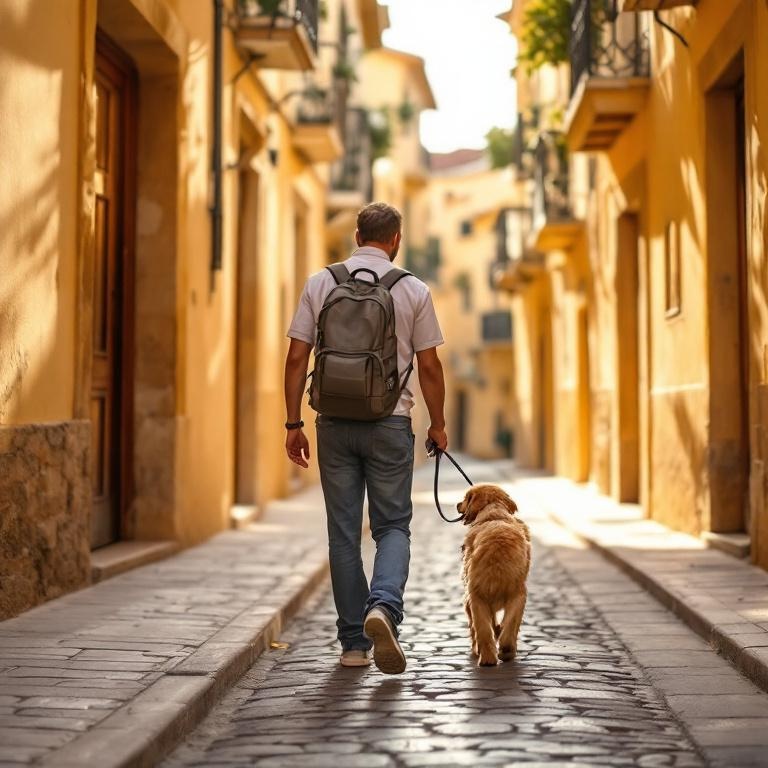
Rabat’s mixed urban development provides what Mdina cannot: surface variety. Your dog encounters limestone sections, concrete sidewalks, packed earth areas, and small grass patches within the same walking route. This variety offers options when sections become uncomfortable.
The tree-lined approach to Howard Gardens creates natural shade corridors that stay cool until mid-afternoon. These mature carob and olive trees, planted during British colonial improvements, now provide the canopy cover that makes summer dog walking feasible.
Better Water Access and Relief Options
Practical dog ownership requires planning for water, waste disposal, and emergency veterinary access. Rabat delivers on all three. Public fountains appear regularly along main streets (though bring your own bowl). Local photographers and event planners rely on these same water sources during long outdoor shoots.
More critically, several veterinary clinics operate within ten minutes of central Rabat. The closest vet to Mdina requires a drive to Attard or back through Rabat. When your dog steps on broken glass or shows signs of heat exhaustion, proximity matters.
Hydration Station Locations
Reliable water access points: Public fountain at Parish Church Square, Howard Gardens entrance, bus terminus area. Always carry a collapsible bowl as these fountains aren’t designed for dogs but provide clean municipal water.
The Buskett Gardens Advantage
Rabat’s proximity to Buskett Gardens transforms a historical city visit into a complete dog experience. Malta’s only significant woodland sits just 1.2 kilometers from central Rabat, reachable by a pleasant walk through residential streets.
Buskett provides what neither ancient city can: genuine off-leash exercise opportunities, natural shade, and soft ground surfaces. Your dog can decompress from historical site stimulation in a Mediterranean woodland setting that locals use for the same purpose.
to comprehensive Buskett Gardens dog walking guide here.
When Mdina Still Makes Sense
Mdina earns its place in specific circumstances that match your dog’s temperament and your timing flexibility. Small, confident dogs that handle crowds well often prefer Mdina’s controlled environment. The shorter walking distances suit older dogs or those recovering from injury.
Winter visits (November through February) eliminate heat concerns and reduce tourist density. Early morning access (before 9 AM) provides a magical experience of walking through medieval streets with minimal human interference.
Photography enthusiasts with well-socialized dogs find Mdina’s consistent architectural backdrop ideal for portraits, provided they time visits carefully and respect local regulations about commercial photography with pets.
The Clear Winner
Rabat takes this comparison decisively. The combination of surface variety, shade options, crowd dispersion, emergency access, and proximity to genuine dog exercise areas creates a superior experience for 80% of dog-tourist combinations. Mdina works for specific situations, but Rabat works consistently.
Plan your Malta historical exploration starting in Rabat. Use it as your base for accessing both cities strategically. Your dog will thank you with better behavior, less stress, and more energy for exploration. The history is equally fascinating, the photo opportunities just as compelling, and the practical experience infinitely more manageable.