
Your vet tells you to watch for heat stroke when temperatures hit 25°C, but in Malta, your dog could be in serious danger at just 22°C. The difference isn’t the temperature, it’s the humidity that no one talks about.
Every summer, I watch dog owners in Sliema and Valletta follow standard Mediterranean heat advice while their dogs struggle visibly in conditions that shouldn’t be dangerous according to conventional wisdom. The problem is that most heat stroke guidance assumes dry heat. Malta’s coastal humidity changes the entire equation.
Why Standard Temperature Guidelines Fail in Malta
Here’s what your vet probably told you: avoid exercise when temperatures exceed 25°C, provide shade and water, and watch for panting. This advice works perfectly in places like Arizona or inland Spain where summer humidity hovers around 30-40%.
Malta’s summer humidity averages 75-80%, according to the Malta Meteorological Office. When humidity climbs above 70%, dogs lose their primary cooling mechanism. Panting works by evaporating moisture from the tongue and respiratory tract. In high humidity, that moisture has nowhere to go.
The Royal Veterinary College’s research on canine thermoregulation shows that effective cooling drops by 60% when humidity exceeds 70%. Your dog pants harder, gets more stressed, and generates more internal heat while cooling less effectively. It’s a deadly spiral that begins at temperatures most owners consider safe.
High humidity environments like Malta’s coastal areas create a perfect storm for canine heat stress because evaporative cooling becomes nearly impossible. Dogs in these conditions can experience heat exhaustion at temperatures that would be completely safe in dry climates.
The Real Danger Zone: Temperature Plus Humidity
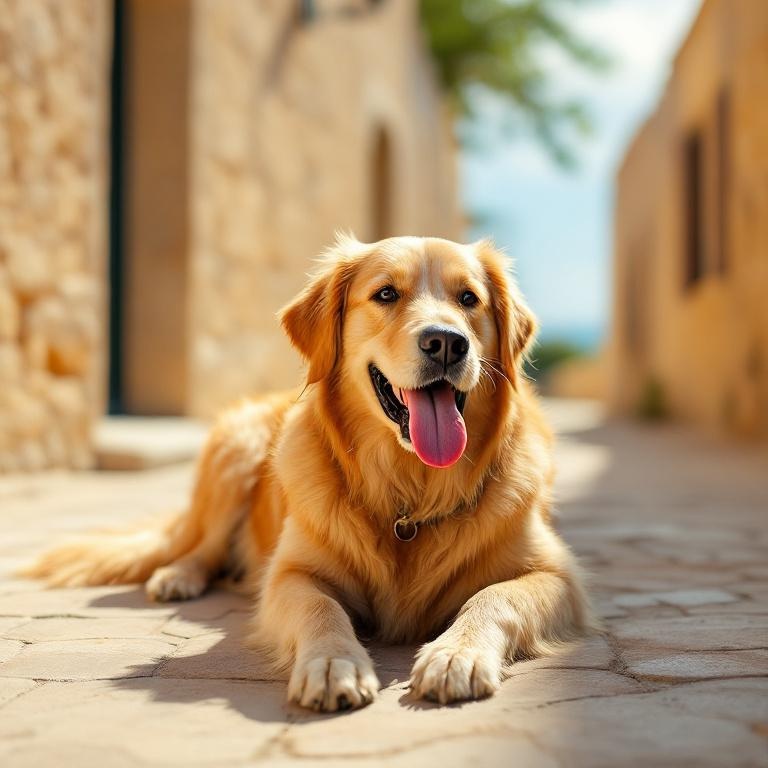
Temperature alone is meaningless in Malta. You need to think in terms of heat index. When air temperature hits 22°C with 75% humidity (a typical June morning in Valletta), your dog experiences the equivalent of 28°C in dry conditions.
The heat index concept is crucial for dog owners to understand because it reflects the actual physiological stress their pet experiences. A dog’s body doesn’t respond to temperature alone but to the combined effect of heat and humidity on their ability to maintain normal body temperature.
By midday, when temperatures reach 28°C with 80% humidity, your dog faces conditions equivalent to 35°C+ in dry climates. This is why dogs collapse on walks that seem perfectly reasonable by traditional temperature standards.
Malta’s Microclimate Traps That Kill Dogs
Malta’s limestone architecture and coastal position create specific heat traps that don’t exist in typical Mediterranean climates. The limestone walls surrounding Valletta and Mdina absorb heat during the day and radiate it back through the evening, keeping humidity high well past sunset.
Apartment dogs face the worst conditions. Malta’s traditional thick stone walls that kept buildings cool in the past are now wrapped in modern concrete and glass. Poor ventilation combines with concrete heat retention to create furnace-like conditions inside. I’ve measured apartment temperatures of 32°C with 85% humidity at 9 PM in August.
The coastal areas around Sliema, St. Julian’s, and Bugibba present another trap. Owners assume sea breezes provide cooling relief. They don’t. Those breezes carry moisture-saturated air that makes cooling even harder for dogs.
Limestone Pavement: The Hidden Killer
Malta’s ubiquitous limestone paving stones retain heat differently than asphalt. They don’t feel as hot to human touch, so owners underestimate the risk. But limestone holds steady heat for hours longer than other surfaces. At 7 PM in July, limestone pavements still register 45°C+ surface temperatures.
The “five-second rule” (if you can’t hold your palm on the pavement for five seconds, it’s too hot for dog paws) becomes meaningless when the entire walking surface of Malta stays above this threshold until 10 PM or later.
Why the Standard Counter-Argument Falls Apart in Malta
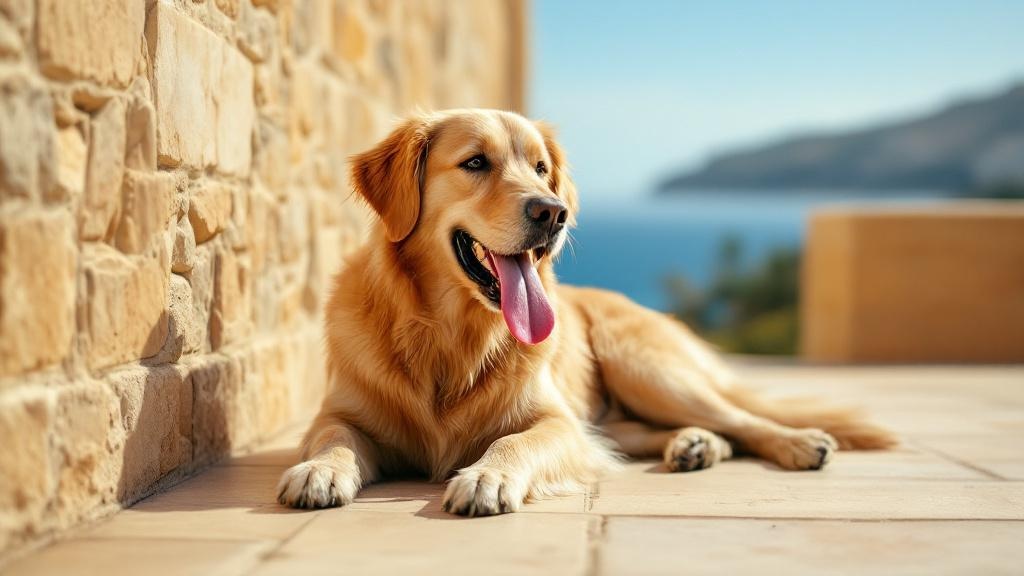
Veterinary professionals often argue that dogs naturally adapt to their climate and that basic precautions (shade, water, avoiding midday heat) are sufficient. This argument has merit in stable, predictable climates.
Malta breaks this logic in three ways. First, the humidity fluctuates dramatically throughout the day, making adaptation impossible. Morning humidity might be 60% (manageable) while afternoon humidity hits 85% (dangerous). Second, Malta’s tourist and expat population means many dogs weren’t born here and lack any genetic adaptation to high humidity heat. Third, the microclimate traps I described above create conditions that change block by block.
A dog that seems fine walking through the open areas around Floriana might collapse 15 minutes later in the heat-trapped streets of Valletta. The variability makes standard precautions inadequate.
The Cascading Health Crisis
Heat stroke in high humidity doesn’t just happen faster, it presents differently. Instead of the classic heavy panting and drooling, dogs in humid heat often show respiratory distress that looks like anxiety or excitement. Owners miss the warning signs because they’re looking for dry-heat symptoms.
Dr. Sarah Mifsud at the Ta’ Qali Veterinary Clinic sees this pattern every summer: dogs brought in for “anxiety” or “breathing problems” that are actually in the early stages of heat stroke. By the time owners recognize the danger, dogs need emergency intervention.
The emergency veterinary services in Malta become overwhelmed every summer weekend with heat stroke cases. to our guide on emergency vet contacts, but your goal should be never needing them.
What This Means for Your Daily Routine
Everything changes. If you’re walking your dog at 8 AM because it feels cool, you’re already in the danger zone. If you’re providing a shaded balcony and thinking that’s adequate, it’s not. If you’re using temperature as your guide, you’re using the wrong metric.
Malta requires extreme measures that feel excessive compared to standard advice: indoor exercise during summer months, air conditioning as a necessity rather than luxury, and complete avoidance of outdoor activity from 7 AM to 9 PM.
This isn’t paranoia. It’s physics. High humidity fundamentally breaks the cooling system that keeps dogs alive in hot weather. Malta’s coastal humidity doesn’t care that your dog seems fine or that other Mediterranean countries have different recommendations.
The Economic Reality
Running air conditioning for a dog from June through September costs approximately €400-600 in electricity. Emergency treatment for heat stroke at Malta’s veterinary clinics starts at €800 and can exceed €2,000 for severe cases requiring overnight monitoring. The economics are clear, but more importantly, heat stroke kills dogs that could have been saved with proper environmental control.
Practical Implications for Malta Dog Owners
Your summer routine needs complete restructuring. Morning walks must finish by 7 AM, not 8 AM or 9 AM like standard advice suggests. Evening walks cannot begin before 9:30 PM, when both temperature and humidity begin dropping simultaneously.
Indoor cooling becomes mandatory, not optional. Fans don’t work in high humidity because they just move saturated air around. Your dog needs either air conditioning or a cooling mat designed for high humidity environments (evaporative cooling mats are useless here).
Car travel requires different planning. A car parked in shade at 24°C outside temperature reaches 40°C+ inside within 20 minutes when humidity is high. The greenhouse effect combines with humidity to create lethal conditions faster than most owners expect.
- 22°C with 75%+ humidity equals 28°C+ heat index for dogs
- Malta’s limestone surfaces stay dangerously hot until 10 PM or later
- Safe outdoor hours: 5:30-7:30 AM and after 9:30 PM June-September
- Air conditioning becomes medical necessity, not luxury, for apartment dogs
- Coastal breezes increase rather than decrease heat stroke risk due to added moisture