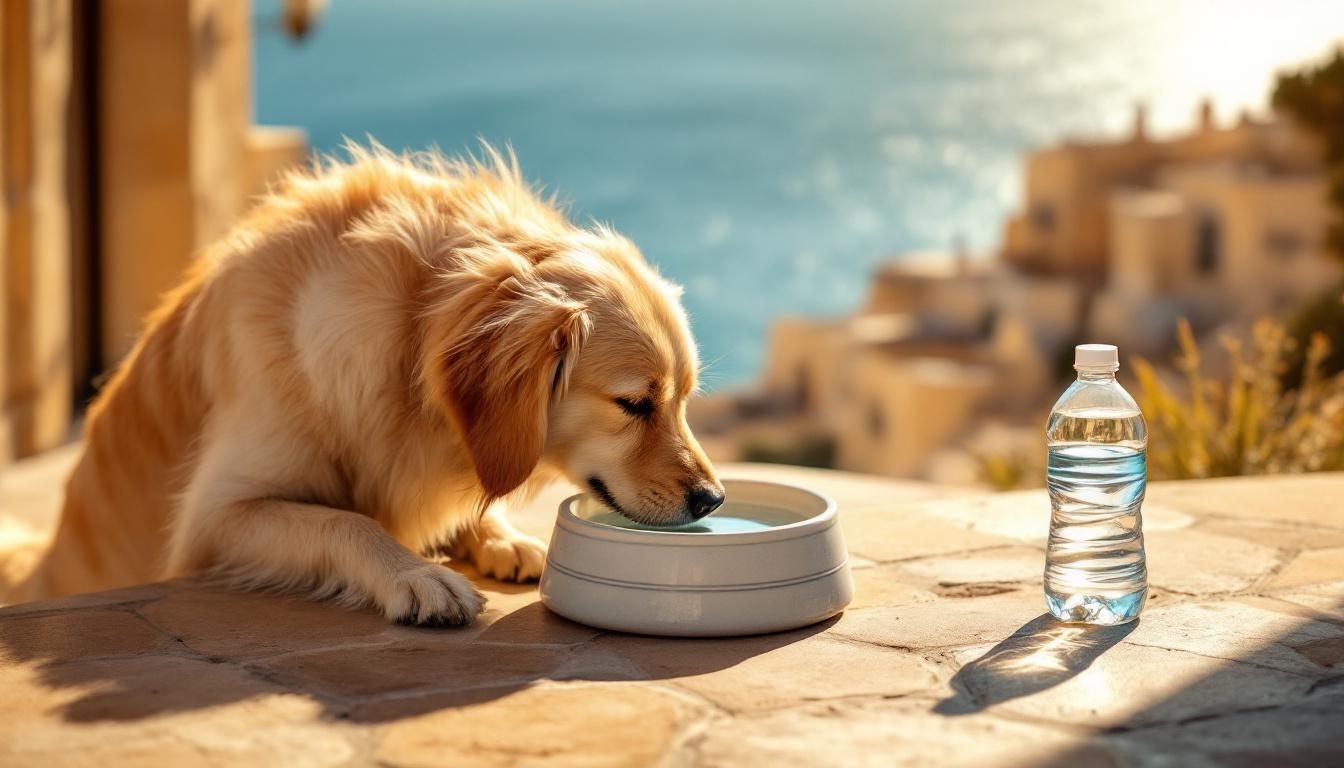
Dog owners across Malta are spending hundreds of euros annually on bottled water for their pets, convinced that our limestone-heavy tap water will damage their dog’s kidneys or cause urinary stones. This expensive habit is based on a fundamental misunderstanding of canine physiology and ignores the actual hydration dangers that kill dogs in our Mediterranean climate every summer.
Malta’s tap water is not only safe for dogs but often superior to many bottled alternatives in terms of mineral balance and regulatory oversight. The real crisis isn’t limestone content, it’s that owners focused on imaginary water purity problems often underprovide the volume of water their dogs desperately need to survive 35°C heat waves.
I see far more dogs suffering from dehydration in hot climates because owners restrict water access over mineral concerns than I ever see with actual mineral-related health issues. Adequate water volume trumps water purity concerns every time in veterinary medicine.
The Limestone Panic: Why Dog Owners Fear Malta’s Water
Walk into any pet store in Valletta or Sliema, and you’ll find owners loading up on imported spring water “for the dog’s health.” The fear stems from legitimate human concerns about hard water: scale buildup in appliances, soap scum, and occasional kidney stone warnings from doctors treating older adults.
But dogs are not humans with four legs. Their kidneys evolved to process a much wider range of mineral concentrations than ours. Wild canids drink from limestone springs, mineral-rich rivers, and alkaline desert pools without developing the urinary issues that concern human medicine.
The European Food Safety Authority has extensively studied mineral tolerance in companion animals. Dogs can safely consume water with calcium levels up to 500mg per liter without adverse health effects. Malta’s levels are half that threshold.
Dogs have remarkably adaptable kidneys that can handle much higher mineral concentrations than humans. The calcium levels in most municipal water supplies, including hard water areas, are well within the safe range for healthy dogs.
What Malta’s Water Actually Contains
The Water Services Corporation conducts monthly testing of Malta’s public water supply. The results, available through official government publications show consistent compliance with EU Directive 2020/2184 on drinking water quality.
Here’s what your dog is actually consuming from Malta taps:
- Calcium: 200-250mg/L (natural from limestone aquifers)
- Magnesium: 15-25mg/L (essential mineral for muscle function)
- Total dissolved solids: 400-500mg/L (within EU pet safety guidelines)
- pH: 7.2-7.8 (ideal alkaline range for canine digestion)
These levels not only meet safety standards but provide beneficial minerals that many commercial dog foods lack. The calcium content that worries owners is actually closer to the mineral profile found in premium raw diets that cost €80 per month.
The Steelman Case Against Tap Water
The strongest argument against Malta tap water for dogs isn’t frivolous. Some veterinary websites warn about “hard water contributing to urinary crystal formation,” and there are documented cases of dogs in extremely hard water areas developing calcium oxalate stones.
This concern deserves serious consideration. Calcium oxalate stones can require surgical removal and cause genuine suffering. If Malta’s water truly increased this risk, the bottled water expense would be justified.
But the evidence doesn’t support the connection. Urinary stone formation in dogs depends primarily on genetics, diet composition, urination frequency, and total water intake. The Maltese veterinary community sees no elevated rates of urinary stones compared to countries with softer water.
Dr. Maria Bonello at the Veterinary Regulation Unit confirms that stone cases correlate with dehydration and high-sodium diets, not water mineral content. Dogs drinking insufficient water (regardless of source) concentrate minerals in their urine, creating stone conditions. Dogs drinking adequate Malta tap water dilute those same minerals harmlessly.
The Real Threat: Mediterranean Dehydration
While owners obsess over limestone, the actual killer stalks Malta’s streets every summer. Heat stroke from inadequate hydration kills more dogs in Malta than all water quality issues combined.
The mathematics are stark. During July and August, when temperatures exceed 35°C and humidity tops 70%, medium-sized dogs require 50-80ml of water per kilogram of body weight. A typical Labrador mix needs nearly two liters daily, not the single bowl most owners provide.
Temperature monitoring at Malta International Airport shows 40+ consecutive days above 30°C each summer. Dogs cannot sweat; they cool exclusively through panting, which requires massive water reserves. Limestone content becomes irrelevant when total intake falls short of physiological needs.
The Economics of Water Fear

Malta’s bottled water industry benefits enormously from pet hydration anxiety. Premium “pet spring water” costs €1.50 per liter at major retailers. A medium dog consuming adequate water year-round represents €800+ in annual revenue.
Compare this to Malta tap water costs: approximately €0.003 per liter, including desalination and distribution infrastructure. The 500x price premium for bottled water delivers no measurable health benefit while creating substantial plastic waste in a country already struggling with environmental sustainability.
High-end filtration systems marketed for pet safety typically cost €300-800 initially, plus filter replacements. These systems remove beneficial minerals while addressing problems that don’t exist for canine health.
What Actually Matters for Dog Hydration in Malta
Successful dog hydration in Malta depends on five factors, none related to limestone content:
Volume sufficiency: Multiple water sources throughout the home, refilled twice daily. Dogs drink more from clean bowls than stale ones.
Accessibility: Ground-level bowls in shaded areas, especially during summer months when concrete and tiles become too hot for comfortable access.
Palatability: Some dogs prefer moving water. Simple fountain systems encourage consumption better than mineral filtration.
Temperature management: Cool (not cold) water appeals to overheated dogs. Room temperature Malta tap water is ideal.
Medical monitoring: Annual veterinary checkups catch kidney or urinary issues early, regardless of water source.
The explains seasonal adjustments for Malta’s extreme summer conditions, but the fundamental principle remains consistent: quantity trumps quality for canine hydration needs.
Practical Recommendations for Malta Dog Owners
Stop buying bottled water for dogs unless addressing a specific veterinary condition requiring mineral restriction. Malta’s tap water provides safe, regulated hydration at sustainable cost.
Invest water-related money in solutions that matter: additional water bowls for multi-story homes, shaded outdoor access points, or veterinary wellness plans that monitor kidney function.
Focus attention on real risks: ensuring adequate total intake, maintaining clean bowls, and recognizing heat stroke symptoms during Malta’s intense summer periods.
Trust the regulatory framework. EU water safety standards protect pets as well as humans. Malta’s compliance record demonstrates consistent safety across all consumer categories.
- Malta’s tap water meets EU safety standards and poses no health risk to dogs despite limestone content
- Dogs can safely process mineral levels up to 500mg/L calcium; Malta provides 200-250mg/L
- Dehydration from insufficient water volume kills more Malta dogs than any water quality issue
- Bottled water for pets costs 500x more than tap water with no health benefits
- Focus on providing adequate daily water volume (50-80ml per kg body weight) rather than water source