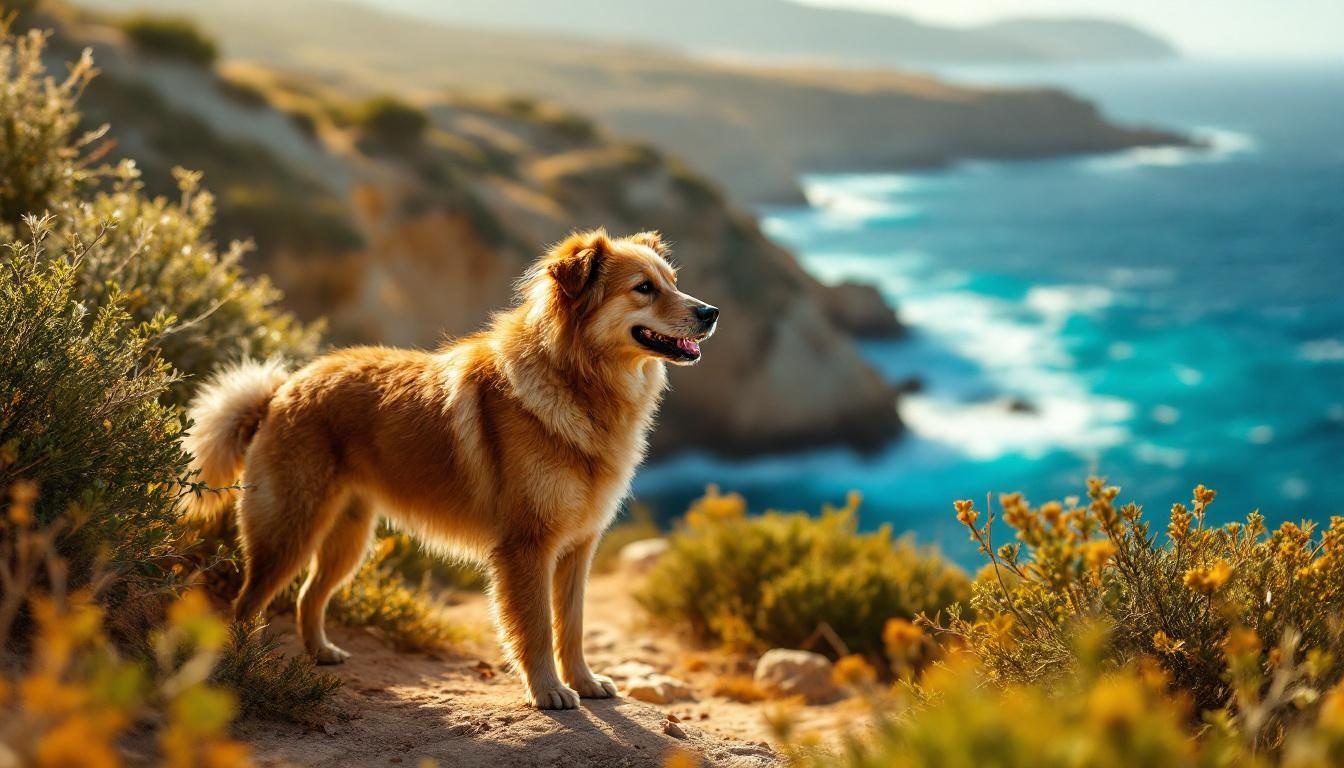
After watching dozens of German Shepherds and Golden Retrievers struggle through Malta’s relentless Gregale winds over the past decade, I’ve learned something most breed guides won’t tell you: the Mediterranean coast demands different dogs than the European mainland. Gozo’s exposed coastline, where 40-knot winds are routine rather than exceptional, separates breeds that merely survive from those that genuinely thrive.
The problem isn’t just wind resistance. Malta’s unique combination of constant salt air, limited exercise space, and year-round warmth creates challenges that standard breed recommendations ignore completely. I’ve seen too many families import breeds suited for Scottish highlands or German forests, only to discover their dogs spend half the year hiding indoors from conditions their genetics never prepared them for.
Environmental stressors like constant wind and salt air create chronic low-level stress in dogs not adapted to coastal conditions. Many owners underestimate how physical environment shapes daily behavior and long-term wellbeing.
Here’s what actually works: five breeds that not only tolerate Gozo’s coastal extremes but were essentially designed for them.
Maltese Terrier: The Obvious Choice That Actually Works
Every local will suggest a Maltese, and they’re not wrong, but not for the reasons they usually give. Yes, they’re Malta’s national breed, but the real advantage is coat engineering. That silky, long coat that looks purely decorative actually functions as a wind barrier while remaining surprisingly cool in Mediterranean heat.
Wind resistance in dogs is largely determined by coat structure and body mechanics, not just size. Breeds with double coats or specific hair textures can actually channel airflow more effectively than their single-coated counterparts.
I’ve walked Maltese dogs along Gozo’s cliffs during 35-knot Majjistral winds. Where larger breeds lean into the gusts and struggle for stability, a well-groomed Maltese moves normally. The coat deflects wind rather than catching it, and their low center of gravity keeps them planted.
The practical reality: Maltese dogs require professional grooming every 6-8 weeks in Malta’s salt air, budget €35-45 per session. Their small size means apartment living works perfectly, and they adapt to Malta’s limited off-leash areas better than breeds that need extensive running space.
Portuguese Water Dog: Built for Coastal Life
This breed was literally developed for working on fishing boats off Portugal’s Atlantic coast, facing conditions nearly identical to Gozo’s exposed shoreline. Their curly, water-resistant coat handles salt spray without the skin irritation that plagues breeds with double coats or fine fur.
What makes them exceptional in Malta is exercise efficiency. Portuguese Water Dogs satisfy their activity needs with intense, shorter sessions rather than extended daily runs. A 30-minute swim at Golden Bay or vigorous play in a small yard meets their requirements better than hours of leash walking that many other medium breeds demand.
The breed’s webbed feet and strong swimming ability mean you can actually use Malta’s greatest asset (the sea) as their primary exercise venue. I’ve watched Portuguese Water Dogs dive through waves that send other breeds retreating to shore.
Cavalier King Charles Spaniel: Gentle Wind Resistance
Cavaliers succeed in Malta because they were bred for variable British weather, including coastal winds, but without the exercise demands that make larger spaniels impractical in our limited spaces. Their silky coat provides wind protection while remaining manageable in Mediterranean heat.
The key advantage is temperament stability in challenging conditions. I’ve observed Cavaliers remain calm and responsive during Malta’s intense Gregale storms, while breeds with higher anxiety levels become difficult to manage. This matters when you’re living in a small apartment and can’t always provide outdoor outlets during rough weather.
Their moderate exercise needs align perfectly with Malta’s reality: 45 minutes of daily activity is sufficient, easily managed through neighborhood walks and brief beach visits. Unlike working breeds that need jobs to stay mentally healthy, Cavaliers are content with companionship and moderate stimulation.
Basenji: Ancient Heat and Wind Adaptation
Basenjis evolved in Central Africa’s harsh, windy conditions, making them naturally suited to Malta’s climate extremes. Their short, fine coat sheds salt and sand easily, and their compact build provides stability in strong winds without the exercise demands of larger breeds.
What sets Basenjis apart in Malta is their independence. They don’t require constant human interaction or extensive daily exercise routines. A Basenji will be content with moderate activity and indoor relaxation during Malta’s hottest periods or stormiest weather, making them ideal for working professionals or retirees.
The practical benefit: Basenjis are naturally clean dogs that groom themselves extensively, reducing the bathing frequency required in Malta’s dusty, salty environment. They also don’t bark (they yodel instead), which matters in Malta’s dense apartment living where noise complaints are common.
French Bulldog: Compact Wind Resistance
French Bulldogs handle Malta’s windy conditions better than most small breeds because of their muscular build and low profile. While their flat faces create heat sensitivity concerns, their sturdy construction prevents the wind-blown instability that affects lighter, leggier breeds.
The breed’s minimal exercise requirements align perfectly with Malta’s space constraints and climate challenges. A French Bulldog thrives with 20-30 minutes of daily activity, easily accomplished through apartment play and short neighborhood walks during cooler hours.
French Bulldogs adapt well to Malta’s indoor lifestyle necessities. During summer heat waves or winter storms, they’re content spending extended periods inside, unlike breeds that become destructive or anxious without constant outdoor access.
The Malta Reality Check: Why Popular Breeds Fail Here
The breeds that consistently struggle in Malta share common characteristics that sound appealing but prove problematic in practice. Border Collies need jobs and extensive exercise that Malta’s limited space can’t provide. German Shepherds suffer in constant heat and develop skin issues from salt air exposure. Retrievers require swimming access and space for retrieving games that most Malta residents can’t offer regularly.
Even seemingly logical choices fail specific tests. Labradors love water but struggle with Malta’s limited shade and become overheated quickly during fetch sessions. Smaller terriers like Jack Russells get blown around in strong winds and become anxious during frequent storms.
Legal Considerations: Malta’s Dog Registration Requirements

Before selecting any breed, understand that Malta’s Dog Registration Act requires microchipping and registration within 30 days of ownership. All five recommended breeds qualify under standard requirements, but imported dogs need additional health certifications that can cost €200-400 depending on country of origin.
Gozo residents face additional considerations: veterinary specialists for breed-specific health issues may require travel to Malta’s main island. This affects breed selection if you’re considering dogs prone to conditions requiring specialist care.
Exercise Reality: Working with Malta’s Limitations
Success with any breed in Malta depends on realistic exercise planning. Research on Mediterranean coastal environments shows that dogs adapt better to consistent, moderate activity than sporadic intensive exercise.
The five recommended breeds succeed because their exercise needs match Malta’s opportunities: short beach visits, neighborhood walks, apartment play, and occasional hiking on Gozo’s inland trails. Breeds requiring extensive daily running, off-leash exercise, or specific activities like herding or tracking become frustrated and problematic in Malta’s constrained environment.
- Choose breeds developed for coastal or variable weather conditions rather than specific climate types
- Prioritize dogs with moderate exercise needs that can be met through Malta’s limited outdoor options
- Consider ongoing care costs including grooming, specialized veterinary needs, and potential travel to main island for breed-specific services
- Plan for Malta’s climate extremes: breeds must handle both strong coastal winds and Mediterranean heat
- Ensure breed temperament suits apartment living and Malta’s dense housing conditions