
Malta International Airport’s heavily marketed pet transit area has dog owners believing they need premium facilities for their pets to travel legally and safely. This is expensive confusion. The new facilities are a convenience upgrade that benefits a narrow slice of traveling dogs, while most Malta-based pet owners can travel through standard procedures without spending hundreds of euros on unnecessary services.
The Myth That Won’t Die
Walk into any veterinary clinic in Sliema or Valletta, and you’ll hear the same question: “Do I need to book the pet transit area at Luqa for my dog’s trip to London?” The answer is almost always no, but the marketing around these facilities has created a false urgency that’s costing Maltese dog owners serious money.
This myth persists because airport marketing materials emphasize comfort and care without clearly distinguishing between legal requirements and premium amenities. When you’re planning your first international trip with your dog, the difference between “recommended” and “required” gets lost in anxiety about doing everything right.
What Malta’s Pet Transit Area Actually Does

Pet owners often confuse marketing convenience with regulatory necessity when planning travel. The most critical factors for safe pet transport are proper health documentation and timing, not premium facility upgrades that may offer comfort but aren’t legally required.
The transit facilities at Malta International Airport provide climate-controlled holding areas, supervised feeding, exercise spaces, and veterinary oversight during layovers. These services target three specific situations: dogs with layovers longer than 12 hours, pets with medical conditions requiring monitoring, and owners who want premium peace of mind regardless of necessity.
For a healthy adult dog traveling direct from Malta to most European destinations, standard airline cargo procedures handle everything required by law. Your dog travels in an IATA-approved crate in a pressurized, temperature-controlled cargo hold. The journey from Luqa to Rome takes 90 minutes. From Malta to London, it’s three hours. These are not durations that require intermediate care facilities.
Airlines have transported pets safely in cargo holds for decades using standard procedures that meet international safety requirements. These new transit facilities serve a niche market but aren’t necessary for the majority of healthy pets on direct flights.
The actual legal requirements for dog travel from Malta center on documentation and health certificates, not airport amenities. Under EU pet travel regulations your dog needs a valid EU pet passport, current rabies vaccination, and microchip identification. Malta’s Department of Veterinary Services handles the health certification process, which costs €35 compared to transit facility fees that start at €150.
The Temperature Reality
Malta’s climate creates legitimate concerns about pet travel timing, but airport facilities don’t solve the core problem. During Malta’s intense summer months (May through September), many airlines embargo live animal cargo when tarmac temperatures exceed 29°C. This happens regularly at Luqa Airport between 11 AM and 6 PM during summer.
The pet transit area doesn’t override these temperature restrictions. If your airline won’t load your dog due to heat, no amount of premium ground facilities changes that decision. The solution is booking early morning or late evening flights during summer months, not paying for transit services.
Air Malta, Lufthansa, and British Airways all operate from Luqa with specific pet policies that prioritize departure timing over ground facilities. Understanding these airline-specific rules saves money and ensures successful travel.
When Premium Facilities Make Sense
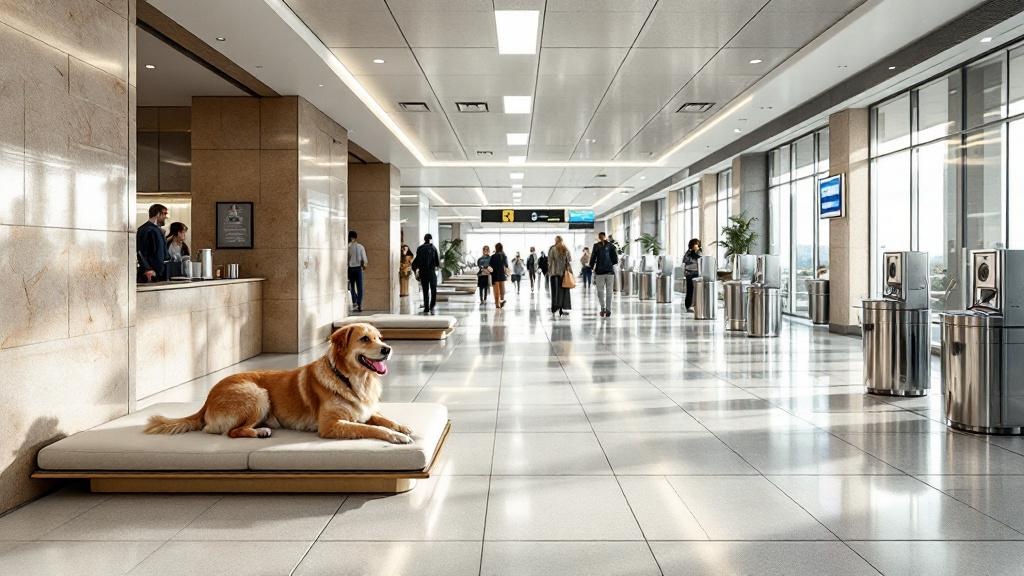
Three situations justify paying for Malta Airport’s pet transit services. First, complex routing with long layovers. If your dog’s journey from Malta includes a 14-hour stopover in Frankfurt, supervised care becomes valuable. Second, dogs with medical conditions requiring monitoring or medication administration during travel. Third, elderly pets or breeds with respiratory issues that benefit from veterinary oversight.
For typical Malta residents traveling to Europe with healthy adult dogs, these conditions don’t apply. A Labrador traveling from Malta to Milan doesn’t need supervised feeding during a two-hour direct flight. A healthy mixed breed going to Dublin doesn’t require veterinary monitoring during standard travel procedures.
The strongest argument for premium transit facilities is peace of mind for anxious owners. That’s not wrong. The problem is that peace of mind costs €200-400 per trip while addressing concerns that proper documentation and airline selection handle more effectively.
The Real Cost of Believing the Hype
Consider Maria from Msida, planning her relocation to Barcelona with her three-year-old Golden Retriever. Airport marketing convinced her that professional transit services were essential for her dog’s safety. She paid €320 for premium handling on a direct Air Malta flight that took 2.5 hours. The same dog could have traveled safely in standard cargo for €180, with the €140 difference going toward her dog’s health certificate and travel crate.
Multiply this scenario across hundreds of Malta-based pet owners annually, and you’re looking at tens of thousands of euros in unnecessary spending. Money that could fund veterinary care, proper travel equipment, or simply stay in owners’ pockets.
The documentation and timing failures hurt worse than wasted money. Owners focused on booking premium facilities sometimes overlook Malta’s specific health certificate timing requirements. Professional pet travel preparation emphasizes that health certificates must be issued within 10 days of travel, a deadline that causes more travel disruptions than inadequate ground facilities ever could.
Smart Travel Planning for Malta Dog Owners
Successful dog travel from Malta starts with understanding airline policies before booking anything. Air Malta allows dogs up to 8kg in cabin on European routes. Larger dogs travel cargo with advance booking and health documentation. Lufthansa and British Airways have different weight limits and seasonal restrictions that affect your options.
Summer travel requires early morning or late evening departures to avoid temperature embargos. Winter offers more scheduling flexibility but requires checking for airline-specific seasonal policy changes. These timing considerations matter more than any ground facility amenities.
Documentation preparation follows a specific sequence. First, ensure your dog’s microchip and rabies vaccination are current. Second, book a veterinary appointment with Malta’s Department of Veterinary Services 2-3 weeks before travel. Third, confirm your airline’s specific requirements for crate size, food restrictions, and check-in procedures. Fourth, book flights with appropriate timing for Malta’s climate conditions.
This sequence costs €200-300 total for most European destinations, compared to €400-600 when premium transit services get added unnecessarily. The money saved covers better travel crates, pre-travel veterinary checkups, or emergency funds for unexpected travel complications.
The Local Reality Check
Malta’s pet travel volume doesn’t justify the premium facility marketing intensity. Most dogs leaving Malta are relocating with families or taking occasional European holidays. These situations involve direct flights to major European cities with standard layover times.
The complex routing that benefits from transit facilities typically involves North American or Asian destinations with 8-12 hour European layovers. These trips represent a small fraction of Malta’s pet travel volume, yet the marketing targets all pet owners equally.
Local veterinarians report that clients arrive confused about requirements versus recommendations, often planning to spend money on services their specific travel situation doesn’t need. The anxiety around “doing everything right” for their dogs creates vulnerability to expensive solutions for non-existent problems.
- Malta Airport’s pet transit area is a premium amenity, not a travel requirement for most dogs
- Proper documentation and health certificates matter more than ground facilities for successful travel
- Summer temperature restrictions affect flight timing, not solved by transit services
- Direct European flights from Malta rarely need intermediate pet care services
- Focus your budget on health certificates, proper crates, and appropriate flight timing rather than premium facilities