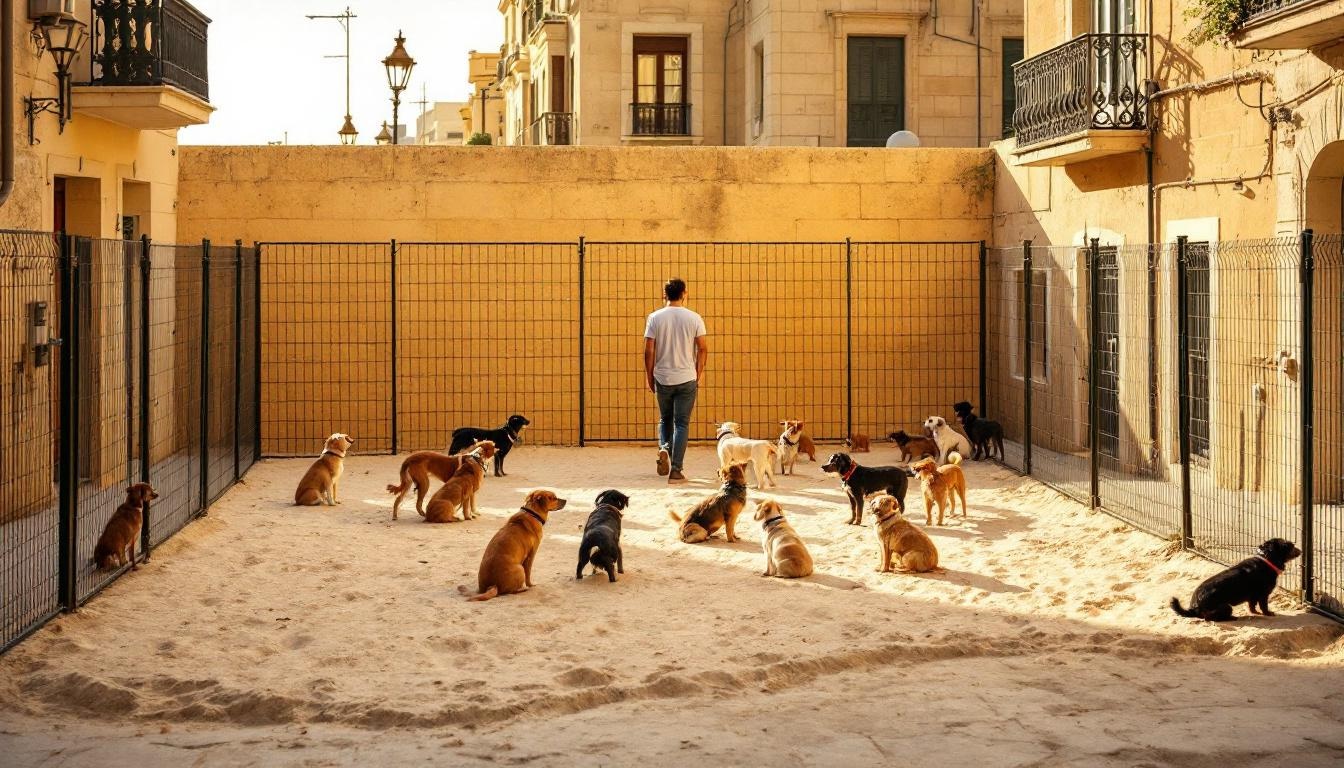
Malta’s dog owners are celebrating the opening of new off-leash areas in Valletta and Sliema as if someone just solved the Mediterranean exercise puzzle. They haven’t. The myth that designated off-leash spaces automatically provide adequate exercise and socialisation is leading well-meaning owners down a path that leaves their dogs underfitness and, in many cases, more frustrated than before they started.
Walk through either of these new areas on a weekend morning and you’ll see the problem immediately: clusters of small dogs barking frantically while their owners chat, larger breeds pacing the perimeter looking for an exit, and heat-stressed animals seeking shade by 9 AM. This isn’t exercise. This is expensive theatre that’s distracting us from what actually works in Malta’s unique environment.
Simply putting dogs in a fenced area doesn’t guarantee exercise or proper socialization. Without structured activity or compatible playmates, many dogs become more stressed in enclosed spaces than they would on a leash walk where they can explore and move at their own pace.
Why Every Dog Owner Wants to Believe the Off-Leash Myth
The appeal is obvious. Malta’s urban density makes traditional dog exercise challenging. Valletta’s narrow streets weren’t designed for energetic Labradors, and Sliema’s waterfront promenade gets too crowded for meaningful walks during peak hours. When the local councils announced dedicated spaces where dogs could run freely, it felt like salvation.
The numbers seem to support the enthusiasm. The new Valletta area spans roughly 400 square meters near the Upper Barrakka Gardens, while Sliema’s space covers about 600 square meters behind the Tigne Point shopping complex. For owners cramped in typical Maltese apartments averaging 120 square meters, these spaces represent a significant expansion of their dog’s world.
Add Malta’s strict leash laws, which require dogs to be leashed in all public spaces except designated areas, and these off-leash zones start looking like the only legal solution to giving dogs freedom. Documentation of these spaces has become a social media phenomenon, with owners sharing photos of their dogs “finally running free.”
The belief that any enclosed space equals adequate exercise is one of the most persistent myths in dog ownership. Dogs need varied terrain, mental stimulation, and controlled social interactions, not just the opportunity to run in circles within artificial boundaries.
The cultural element runs deeper. Mediterranean dog ownership has historically meant small, apartment-suitable breeds. The recent trend toward larger, more active breeds like German Shepherds and Border Collies has created an exercise crisis that traditional walking can’t solve. Off-leash areas feel like permission to own the dogs we want rather than the dogs our living situations actually accommodate.
The Uncomfortable Reality About Exercise vs. Freedom

Here’s what nobody wants to acknowledge: most dogs get less meaningful exercise in off-leash areas than they do on a structured 45-minute walk. The Valletta and Sliema spaces, while well-intentioned, demonstrate this perfectly.
Start with size constraints. A medium-energy dog like a Cocker Spaniel needs roughly 2 kilometers of walking daily to maintain fitness. At 400 square meters, the Valletta area would require your dog to cross the entire space 125 times to cover that distance. That’s not happening. Instead, most dogs spend their off-leash time investigating the same corners, greeting the same dogs, and settling into stationary socialising.
The social dynamics make it worse. Pack mentality in enclosed spaces tends toward either excessive arousal (the barking clusters) or shutdown behavior (dogs that find a corner and stay there). Neither provides the steady, progressive exercise that builds cardiovascular fitness and mental satisfaction.
Malta’s climate adds another layer of complexity that off-leash advocates consistently underestimate. Between May and September, ground temperatures in these concrete and gravel areas can exceed 45°C by mid-morning. Dogs exercising on hot surfaces risk paw pad burns and heat exhaustion. The Sliema area’s partial shade helps, but the Valletta location offers minimal protection during peak hours.
Dr. Sarah Fenech, a veterinarian practicing in Malta for over 15 years, sees the consequences regularly. “I’m treating more heat-related incidents now than before these areas opened,” she explains. “Owners think ‘off-leash’ means ‘more exercise,’ but they’re often pushing their dogs harder in less suitable conditions.”
What Actually Works in Malta’s Environment
Effective dog exercise in Malta requires working with, not against, the Mediterranean climate and urban constraints. This means abandoning the fantasy that more freedom automatically equals better fitness.
Early morning walks between 6:00 and 8:00 AM provide the foundation. During these hours, pavement temperatures stay below 30°C, and the reduced foot traffic allows for longer routes through areas like Msida Creek or the quieter sections of Gzira promenade. A brisk 30-40 minute walk during this window delivers more cardiovascular benefit than an hour of meandering in an off-leash area.
Evening walks after 7:00 PM extend the exercise window. The key is duration and variety, not intensity. A tired dog is a good dog, but an overheated dog is a dangerous situation waiting to happen.
Mental stimulation often matters more than physical space, especially for intelligent breeds popular in Malta like Border Collies and Australian Shepherds. Training programs that incorporate problem-solving can exhaust a high-energy dog more effectively than running in circles.
Beach access, where legally permitted, provides superior exercise opportunities. The soft sand increases the physical challenge, while the open space allows for genuine running. Għadira Bay and certain sections of Golden Bay permit leashed dogs during early morning hours. The natural obstacles and varied terrain provide mental stimulation that fenced areas simply cannot match.
Swimming, where safe and legal, represents the gold standard for Malta dog exercise. The natural temperature regulation makes it ideal for hot climate fitness, while the low-impact nature protects joints in older dogs. Several dog owners have found success with early morning visits to more remote coastal areas, though this requires careful attention to local regulations and tidal conditions.
The Hidden Costs of Off-Leash Dependency

Relying primarily on off-leash areas creates problems that extend far beyond inadequate exercise. The most immediate issue is behavioral regression. Dogs that spend most of their outdoor time in off-leash environments often lose proficiency with leash walking, making necessary trips (veterinary visits, travel, emergency situations) more stressful for both dog and owner.
Social skills suffer as well. The artificial environment of fenced dog areas doesn’t replicate real-world social situations. Dogs learn to interact with other dogs in a highly stimulated, enclosed setting, but they don’t learn to calmly pass other dogs on a narrow Valletta street or remain focused during busy market visits.
The financial cost adds up quickly. Both areas charge modest fees for regular use, but the real expense comes from the missed opportunities for free exercise. Malta offers countless walking routes, coastal paths, and early-morning opportunities that provide superior fitness benefits at no cost. Owners who become dependent on off-leash areas often stop exploring these alternatives.
Weather dependency becomes a serious limitation. During Malta’s occasional winter storms or the hottest summer days, off-leash areas become unusable. Dogs accustomed to this exercise routine suddenly have no outlet, leading to destructive behavior and owner frustration.
The most concerning cost is health-related. Dogs that get most of their exercise in short, intense bursts rather than steady, sustained activity develop different fitness profiles. They may appear tired after off-leash sessions, but they’re not building the cardiovascular endurance and muscle tone that comes from regular walking on varied terrain.
When Off-Leash Areas Actually Help
These spaces aren’t worthless, but their value lies in specific, limited applications rather than serving as primary exercise solutions. For elderly dogs with mobility limitations, the soft surfaces and controlled environment can provide gentle movement opportunities that might be difficult on Malta’s often uneven pavements.
Puppies undergoing socialisation benefit from carefully managed introductions to other dogs, though this requires active supervision and planned interactions rather than the free-for-all approach most owners adopt. The key is using these areas as tools for specific training goals, not as exercise substitutes.
Dogs recovering from injuries or surgery may find the secure environment helpful for controlled rehabilitation exercise, particularly when veterinary guidance supports this approach. The ability to move without leash restrictions while remaining in a safe, enclosed space can aid recovery in specific circumstances.
For owners with physical limitations that make long walks challenging, these areas provide a way to give their dogs some freedom while remaining stationary themselves. However, this should be combined with other exercise strategies rather than serving as the sole solution.
- Off-leash areas provide freedom, not necessarily exercise. Most dogs get better fitness from structured walks
- Malta’s climate requires exercise timing strategy. Early morning and evening walks work better than midday off-leash sessions
- Mental stimulation through training and varied routes often exhausts dogs more effectively than physical space
- Beach and coastal walking, where permitted, provides superior exercise opportunities in Malta’s environment
- Use off-leash areas as supplements for specific needs, not as primary exercise solutions