
Malta’s limestone terrain is systematically destroying dogs’ paws, and most owners don’t realize the damage until it’s too late. The Mediterranean’s ancient geological foundation creates surfaces that are uniquely hostile to canine pads, with limestone that fractures into razor-sharp edges and absorbs heat to scalding temperatures.
After treating hundreds of paw injuries over fifteen years at clinics across Sliema and St. Julian’s, I’ve watched the same preventable pattern repeat: owners discover their dog’s injured pads only after weeks of cumulative damage. The harsh truth is that Malta’s terrain requires proactive protection, not reactive treatment.
Paw pad injuries from rough terrain are cumulative damage cases that owners often miss in the early stages. Dogs will continue walking on damaged pads due to their high pain tolerance, which means by the time lameness is obvious, we’re often dealing with deep abrasions or infected wounds that could have been prevented with proper protection.
The argument against protective measures typically runs like this: dogs evolved to run on natural surfaces, their pads will toughen up, and generations of Maltese dogs survived without booties or special care. This isn’t entirely wrong. Dogs do develop calluses, and natural selection did favor hardy paws.
The problem is that Malta’s limestone geology creates conditions that wild dogs never encountered. The islands’ Globigerina limestone fractures differently than granite or sandstone, creating surfaces with microscopic sharp edges that act like slow-motion sandpaper. Combined with surface temperatures that regularly exceed 50°C in summer, Malta’s terrain presents a perfect storm for paw damage.
The Hidden Cost of Malta’s Unique Geology
Understanding why Malta’s terrain is particularly destructive requires looking at the islands’ geological composition. The University of Malta’s geological surveys show that Malta’s dominant Globigerina limestone contains fossilized marine organisms that create an abrasive surface unlike typical Mediterranean stone.
When limestone weathers on Malta, it doesn’t smooth out like river rocks. Instead, it fractures along crystal boundaries, creating fresh sharp edges constantly. Walk the coastal path from Sliema to St. Julian’s and you’ll see this process in action: every winter’s storms expose new jagged surfaces that tear at paw pads with each step.
Dr. Sarah Bonello from the Sliema Veterinary Clinic explains the progression: “We typically see micro-tears first, small cuts between the pads that owners miss during casual checks. These heal poorly because dogs continue walking on the same abrasive surfaces. By the time owners notice limping, we’re often treating secondary infections along with the original trauma.”
The Temperature Factor Everyone Ignores
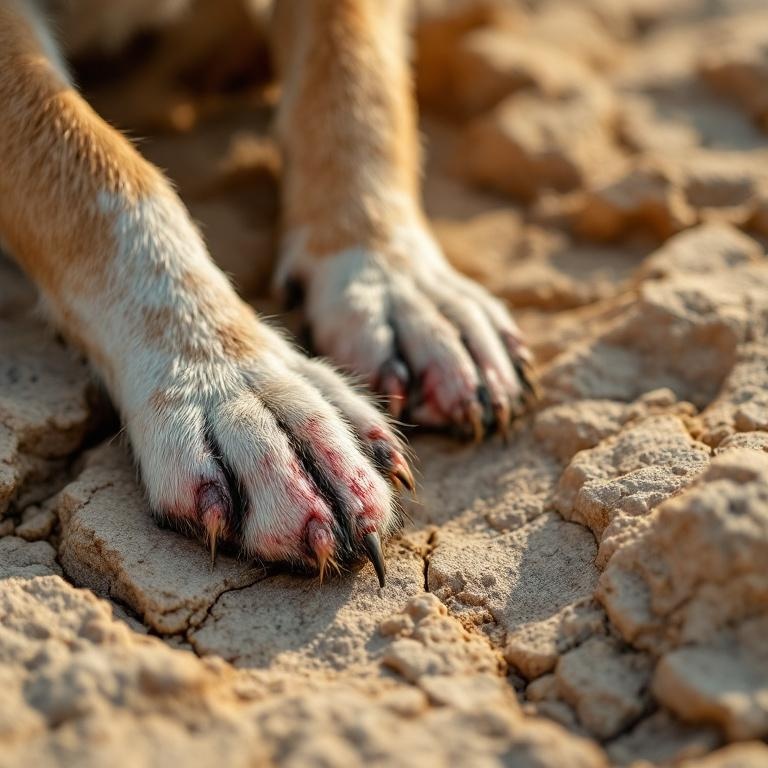
Malta’s Globigerina limestone is particularly abrasive due to its high content of fossilized foraminifera, which create microscopic cutting surfaces when the rock weathers. The combination of this geological composition with Malta’s intense solar heating creates ground conditions that can reach temperatures well above what most domestic animals are adapted to handle.
The real danger multiplies when Malta’s summer sun heats limestone surfaces. Light-colored limestone reflects some heat but still reaches surface temperatures of 55-60°C during July and August afternoons. At these temperatures, paw pads suffer thermal burns within seconds of contact.
Here’s what happens: the initial heat damage weakens the pad’s outer layer, making it exponentially more susceptible to cuts and tears. A dog that might handle rough surfaces at normal temperatures becomes vulnerable to injury on the same path when limestone heats up.
The timing creates a cruel catch-22. Summer months offer the best weather for exploring Malta’s outdoor attractions, but they also present the highest risk for paw injuries. Popular walking areas like the Blue Grotto coastal path and Mdina’s bastions become hazardous during peak sun hours, yet these are precisely when most visitors want to explore.
High-Risk Zones: Where Prevention Matters Most
Not all Maltese terrain poses equal risk. Three factors determine injury likelihood: limestone type, foot traffic, and exposure to weathering. Areas with heavy tourist traffic often have the worst surfaces because constant foot traffic prevents natural weathering that would smooth sharp edges.
Dingli Cliffs presents the highest risk combination: exposed Upper Coralline limestone with minimal soil cover, intense sun exposure, and loose chips from ongoing erosion. The path edges contain limestone fragments that shift underfoot, creating unpredictable sharp surfaces.
The Blue Grotto area ranks second for paw injuries. Sea spray creates salt deposits that increase pad dehydration, while wave action constantly deposits new sharp shell fragments and coral pieces among the limestone. Dogs instinctively investigate tide pools, stepping on surfaces that combine biological and geological hazards.
Comino’s northern coastline presents deceptive risks. The apparently smooth limestone platforms contain hairline fractures filled with salt crystals. These expand and contract with temperature changes, creating microscopic cutting edges that cause gradual pad wear rather than obvious cuts.
Prevention Strategies That Actually Work

Effective paw protection in Malta requires a three-part approach: surface avoidance, paw conditioning, and protective equipment. Each element addresses different aspects of the injury risk.
Surface avoidance means timing and route selection. Walk before 8 AM or after 6 PM during summer months. Use the palm test: if you can’t hold your palm against the limestone for five seconds, it’s too hot for paw pads. Choose routes with packed earth or grass sections where possible.
Paw conditioning involves gradual exposure to rough surfaces combined with pad care. Start with five-minute walks on limestone, increasing by two minutes weekly. After each walk, rinse paws with fresh water to remove limestone dust and salt. Apply pad balm containing lanolin or beeswax twice weekly to maintain pad flexibility.
Protective equipment becomes necessary for longer walks or challenging terrain. Quality dog boots designed for rocky surfaces cost €40-80 but prevent injuries that require €200+ in veterinary treatment. Local suppliers in Valletta and Mosta stock boots rated for abrasive surfaces, though ordering online provides better selection.
The Economics of Prevention vs. Treatment
The financial argument for prevention becomes clear when you examine treatment costs for paw injuries in Malta. A typical pad laceration requires veterinary examination (€45), wound cleaning and medication (€30-60), protective dressing (€15), and follow-up visits (€35 each). Severe cases requiring surgical repair or infection treatment easily exceed €300.
Prevention costs break down differently: quality paw balm (€12, lasts 3 months), protective boots (€60, last 2+ years), and modified walking routines (no additional cost). The prevention approach costs roughly €25 annually versus treatment expenses that can reach €500 for serious injuries.
Beyond immediate costs, paw injuries create ongoing complications. Dogs with pad damage often develop gait compensation patterns that stress joints and muscles. Recovery requires restricted activity for 2-3 weeks, limiting exercise and socialization during healing. Secondary infections extend treatment duration and increase costs significantly.
Legal Obligations Under Malta’s Animal Welfare Act
Malta’s Animal Welfare Act places specific obligations on dog owners regarding preventable injuries. The Act’s provisions require owners to provide appropriate care and prevent unnecessary suffering. Allowing repeated paw injuries from known hazards could constitute neglect under these regulations.
While enforcement typically focuses on obvious abuse cases, veterinary records documenting recurring preventable injuries can trigger Animal Welfare investigations. The legal standard asks whether a reasonable owner would have taken preventive measures given known risks.
This legal framework reinforces the practical argument for prevention: protecting your dog’s paws isn’t just good pet care, it’s a legal responsibility when hazards are predictable and preventable.
- Malta’s limestone creates uniquely abrasive surfaces that require proactive paw protection
- Summer surface temperatures exceed 55°C, causing thermal burns that increase injury susceptibility
- High-risk areas include Dingli Cliffs, Blue Grotto paths, and Comino’s rocky shoreline
- Prevention through timing, conditioning, and protective gear costs significantly less than injury treatment
- Malta’s Animal Welfare Act requires owners to prevent predictable injuries